|
 

Springtime Tune-up and U.A.T. check up.
BVM has the
products to help
Batteries, air systems and fuel
systems need to
be checked after an extended period of non
use.
Air
Systems
  Just like hydraulic
systems in real aircraft, our pneumatic systems work best if exercised
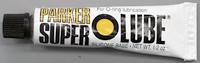
regularly. BVM air cylinders are assembled using Parker "Super O-lube" on the
O-ring seals. Just like hydraulic
systems in real aircraft, our pneumatic systems work best if exercised
regularly. BVM air cylinders are assembled using Parker "Super O-lube" on the
O-ring seals.
 If a
cylinder gets sticky or dry or is bypassing air, you can use a hobby type
syringe to inject a small amount of fresh Super O-lube into the cylinder and
cycle it a few times. Check that it does not leak in the center stroke position
as well as at both extremities of travel. If a
cylinder gets sticky or dry or is bypassing air, you can use a hobby type
syringe to inject a small amount of fresh Super O-lube into the cylinder and
cycle it a few times. Check that it does not leak in the center stroke position
as well as at both extremities of travel.
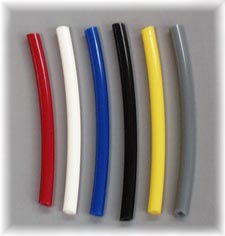
The air line (pneumatic tubing) should be changed out if the model
is more than 2 years old. The tubing that BVM introduced in 2002 has proven to
be much less affected by time, temperature, pressure and use. A system plumbed
with this heavy duty air line can operate safely up to 160 psi in 95°F
temps. Our factory models that have been plumbed with this tubing for over 2
years are performing well.
Fuel
System
We use the clear poly tubing for the 6mm plumbing in the fuel
system. It allows easy detection of air bubbles in the fuel flow.
However, the combination of sunlight and
turbine oil causes this tubing to get less pliable and it darkens with
age.
We suggest changing it
annually to avoid problems.
A good
preflight check of the fuel system should be accomplished prior to the first
flight of the day. Simply run the engine at full power for about 30 seconds and
watch the U.A.T. and all visible fuel lines for air bubbles. If the fuel level
in the U.A.T. decreases, air is being sucked into the system somewhere upstream
of the U.A.T. or the seal in the cap of the U.A.T. or 6mm tubing to brass
fittings is leaking.
Air
bubbles anywhere in the fuel system are unacceptable.
Safety Wire
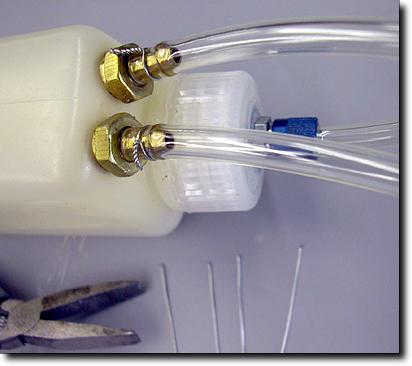 Secure the 6mm tubing onto all brass and
aluminum nipple fittings in the fuel system except for the overflow
lines. Secure the 6mm tubing onto all brass and
aluminum nipple fittings in the fuel system except for the overflow
lines.
Sullivan packages .020"
stainless wire that is available in hobby stores. Automotive speed shops also
stock spools of safety wire in the .020" to .032" diameter.
Check the security of the U.A.T. cap. If it is
removed for any reason, replace the teflon tape seal with 2-3 wraps of 1/2"
wide "pipe thread seal tape," available at plumbing supply
stores.
Range Check the
radio
We have written about this in our kit instruction manuals. Be sure
to check it periodically.
Contact Us
All graphics and photos
Copyright 2011 BVM, Inc.
Use of graphics or photos without written permission from
BVM is
strictly prohibited.
|